
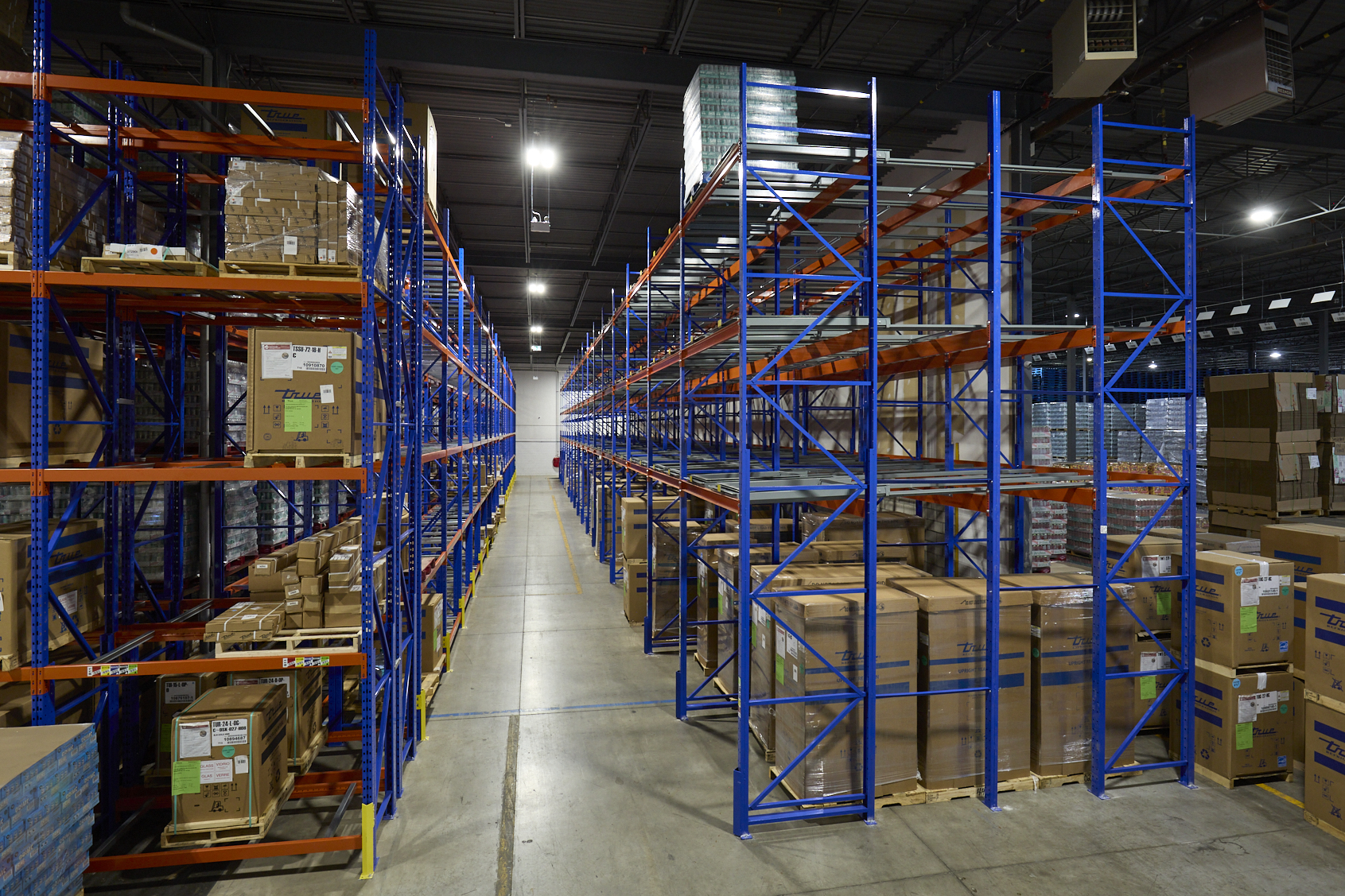
Most high density storage conversations start with space. A customer has a building, they know roughly what they want to fit in it, and the first instinct is to work out how many pallet positions the footprint can hold. That is a reasonable place to begin, and in some applications the math works out close to the first estimate.
Available space establishes your footprint, but the system specification must be driven by your operational needs, not just the floor plan.
Whether a lane runs at healthy occupancy or sits half empty, whether the customer’s pallets suit the configuration being proposed, and whether the rotation they are expecting is achievable in practice are all answered by the inventory and the way it moves, not by the floor plan. Those answers should come out of a more in-depth intake conversation.
What follows are the questions 3D Storage Systems works through with dealers before a pushback or pallet flow system gets specified. Some of them will already be part of your discovery process. The value is in having the full set in one place, and in knowing which answers actually change the design. The focus here is full pallet systems; carton flow involves a separate set of questions.
One thing worth saying up front: this checklist will not always end up with a high density system as the recommendation. Sometimes the answers point to selective rack, or a combination of pushback, pallet flow, and selective rack across different zones of the same building. That is a legitimate outcome of a good intake, and it is a better result than a dense system that never fills.
1. Inventory profile
This is the foundation. Nearly every downstream decision traces back to it.
The questions that matter:
- How many SKUs are being stored, and how many pallets on average sit behind each one?
- What are typical incoming and outgoing quantities? A single pallet at a time, a partial load, or a full truckload?
- Does the inventory contain a small number of high volume products, or a large number of low volume ones?
Average pallets per SKU is the number that drives lane depth. As pallets per SKU increase, deeper lanes become easier to justify. Where the average is low, selective rack often remains the better fit; there is no benefit in forcing density onto inventory that cannot fill it.
There is also a sizing check worth considering. 3D has referred to it as the “Rule of Three”: a storage depth is well matched to the inventory when average pallets per SKU run at roughly three times that depth. A four-deep lane wants to see around twelve or more pallets per SKU on average. A six-deep lane wants around eighteen. The reasoning behind the multiplier is occupancy. 3D’s position is that any storage solution should be targeting a minimum of 75% utilization to be worth the investment, and the Rule of Three is a quick way to check whether a given depth will get there.
Of course, keep in mind that it is a rule of thumb rather than a calculation, and 3D applies it as a first feasibility filter across storage types, including pallet flow and drive-in, not just pushback.
2. Pallet and load characteristics
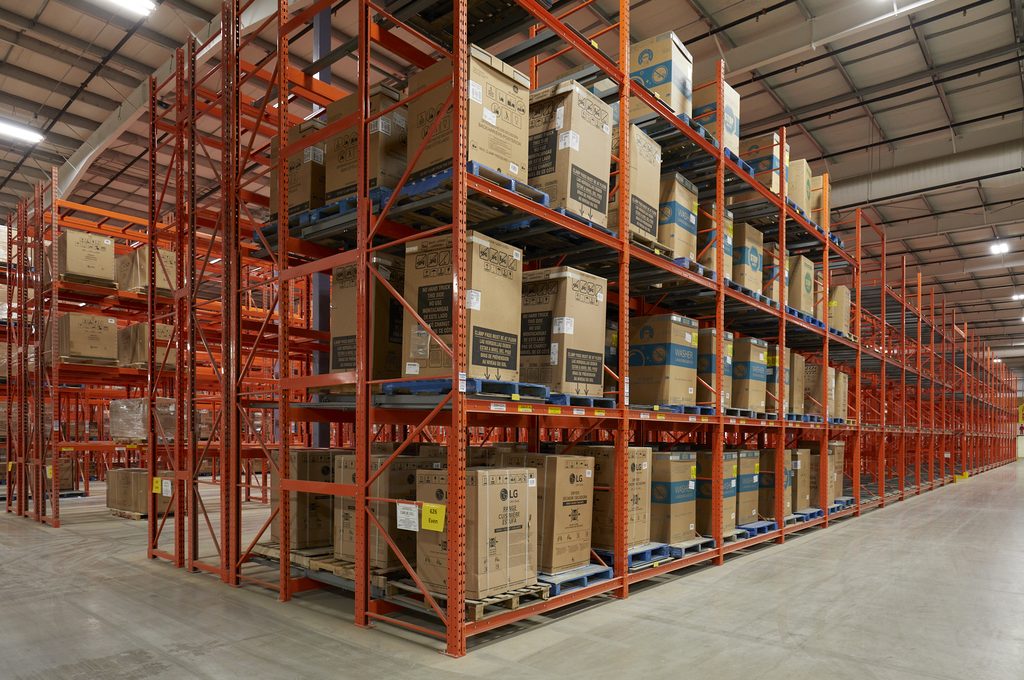
The pallet is part of the system, and its dimensions and weight are design inputs rather than details to confirm later.
Ask about:
- Pallet footprint and type. Standard pushback specifications are built around a 40 inch face by 48 inch deep GMA or CHEP style pallet. Anything outside that is not a problem per se, but it does need to be engineered rather than assumed.
- Load weight. Standard pushback configurations are rated to 3,000 lbs. per pallet. Heavier loads, or loads at the top of the range in deeper lanes, should be confirmed against the cart specification. Deep lane pallet flow is typically designed around GMA or CHEP pallets carrying 500 to 3,000 lbs., with heavier loads calling for a different track configuration.
- Consistency. A single pallet standard across the SKUs going into the system is straightforward. A mix of pallet sizes and types is workable, but it needs to be flagged early so the design accounts for it.
- Pallet underside condition. This one matters most in pallet flow. Broken or missing bottom boards, protruding nail heads, and stretch wrap hanging below the pallet can prevent pallets from restarting, and in some cases even damage components.
- Load stability and overhang. How the load sits on the pallet, and whether it overhangs, affects both handling and the clearances built into the design.
Where pallets or loads fall outside the standard specification, the right move is to get the details to 3D’s engineering team before quoting rather than after. Special sizes and non standard loads are definitely addressable, but it helps significantly to know these details in advance. On pallet flow projects, 3D recommends testing a sample of the customer’s pallets, loaded with their product, before a final quotation is issued.
3. Operating environment
Ambient, cooler, and freezer applications all need to be identified at intake.
Pallet flow and pushback operate reliably in cooler and freezer environments, and no special forklift is required in those conditions. 3D has pallet flow installations operating in temperatures ranging from 122°F down to minus 40°F, including blast freezers, and multiple six-deep pushback installations running in freezers on standard reach trucks.
What matters is that the environment is documented up front rather than discovered during design. Temperature affects the wider system decision, and it is one of the inputs that determines whether pushback, pallet flow, or a combination best suits a given zone of the building.
4. Rotation requirements and throughput
Rotation deserves a conversation, because it is one of the areas where assumptions get made early and are expensive to correct later.
Start with what the customer actually needs:
- Is there a lot control, date code, or shelf-life requirement, and is it a business preference or a regulatory obligation?
- Does the requirement apply across all SKUs, or only to a subset?
- What is the incoming and outgoing pace, and how many lanes will a given SKU realistically occupy at once?
- Is there an inventory management practice that tracks which lane to pick from, or is lane selection currently left to operator judgment?
Both pushback and pallet flow can deliver disciplined rotation, and they do it differently.
Pallet flow is loaded at one end and unloaded at the other, so within a single lane the sequence is inherent to the design. Strict rotation is straightforward to achieve with minimal operating discipline, which is a genuine advantage in applications where rotation is non-negotiable.
Pushback achieves rotation across lanes rather than within them. When a product is spread over multiple lanes, the oldest lane is picked first, and a new lot goes into a fresh lane rather than on top of existing stock. That requires lane rules and pick discipline, and it works consistently where those rules are followed.
In both cases, an inventory management practice that identifies the correct lane is what makes rotation consistent. No rack configuration removes that requirement entirely, which is why the question belongs on the intake sheet.
5. Building and handling context
The building and the fleet set practical limits on what can be specified, and both are quick to confirm.
- What lift truck type is in use, and does it have the reach and lift capacity for the proposed configuration?
- What is the aisle width, and how does that constrain truck selection?
- What is the current storage method, and what occupancy is it achieving? Standard rack, drive-in, and floor storage all produce a different foundation to compare against.
One point worth raising with customers in regards to pushback rack: the force required to push a loaded lane back is a small fraction of the total weight in the lane, on the order of 4%. As an illustrative example, 2,000 lb. loads in a six-deep lane work out to roughly 400 lbs. of force to load, which sits comfortably within the capability of most trucks already on the floor, including reach trucks in freezer applications. Customers often assume deeper lanes call for a heavier duty truck, and that concern is usually resolved once the actual numbers are revealed.
6. Selectivity and future flexibility
The last set of questions is about how the system will need to behave two or three years from now.
- Are SKU counts or velocity expected to change?
- Is seasonality a factor?
- Does every lane need to be assigned to a specific product, or can lanes be allocated as inventory dictates?
Fixed-lane assignments mean sizing storage around each product’s peak, which leaves capacity idle for most of the year. Allowing lane assignment to adapt to what is on-hand generally supports better occupancy across the system, and it gives the customer more room to absorb changes in the SKU mix without a reconfiguration.
Why the intake matters beyond the spec
Getting the inventory and pallet questions right up front is what prevents revisions, delays, and mismatched expectations once the system is on the floor.
It also produces a better recommendation. An intake that surfaces low pallets per SKU on half the inventory, or a strict rotation requirement on a subset of products, points toward a mixed approach rather than one system across the whole building. That is usually the lower total cost outcome, and it is a stronger position to present to a customer than a single product answer.
The checklist, at a glance
- Number of SKUs and average pallets per SKU
- Incoming and outgoing pallet quantities
- Pallet footprint, type, and consistency
- Pallet underside condition: bottom boards, nail protrusion, stretch wrap
- Load weight, stability, and overhang
- Operating environment: ambient, cooler, or freezer
- Rotation requirement, including lot control and shelf life
- Expected pallet flow performance, including stop-restart behavior
- Lanes per SKU and current inventory management practice
- Lift truck type and available aisle width
- Current storage method and actual occupancy
- Expected changes in SKU count, velocity, or seasonality
The right storage solution is determined by the fit between inventory profile, pallet characteristics, operating rules, and the performance expected from the system. A proper intake is how that fit gets found before the first piece of steel is ordered.
At 3D Storage Systems, we work with dealers from initial inventory assessment through to engineered design for all pushback, pallet flow, and carton flow applications. Whether you use this checklist to guide your planning or prefer to call us for a deeper dive into your project, we’re ready to help.